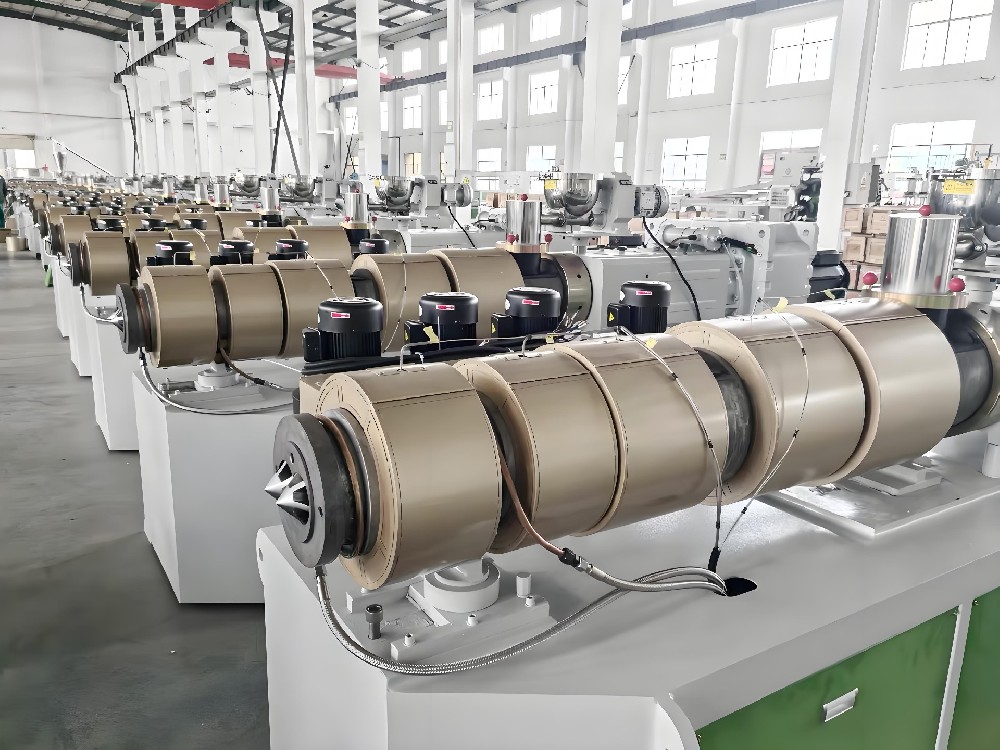
Applications on Injection Molding Machines
Barrel Heating: Provides stable heat to the injection molding machine's barrel, ensuring that plastic raw materials (such as ABS, PS, PC, etc.) are fully melted and plasticized. This guarantees uniform temperature within the molten plastic, thereby enhancing the appearance and mechanical properties of the molded products. It is widely used in the production of various injection-molded goods, including toys, appliance housings, and automotive interior components.
Nozzle Heating: Installed at the nozzle section of the injection molding machine, it maintains the temperature of the molten plastic, preventing it from cooling and clogging at the nozzle tip. This ensures that the plastic flows smoothly into the mold cavity, thereby avoiding defects such as short shots (incomplete filling) or prominent weld lines.
Mold Temperature Control Assistance: In certain specialized injection molding processes—such as the production of high-gloss or high-precision plastic products—these heaters serve as auxiliary heating components for mold temperature control. They help the mold quickly reach its target temperature, thereby shortening the injection cycle and boosting production efficiency.
Applications on Extrusion Machines
1.Plastic Processing Sector
*Pipe and Profile Extrusion: Heats the barrel and die head of the extruder to ensure the full melting of plastic raw materials (such as PE, PP, PVC, etc.). This facilitates the production of pipes (e.g., water supply and drainage pipes) and profiles (e.g., door and window frames) with uniform wall thickness and stable performance, serving industries such as construction, agriculture, and home improvement.
*Film Extrusion: Used on the extruders within plastic film production lines to ensure the uniform melting of raw materials. The molten plastic is extruded through a die head to form a continuous film, enabling the production of plastic films suitable for various applications, including food packaging, agricultural mulching, and industrial protection.
2.Rubber Processing Sector: Employed on rubber extrusion equipment to heat the extruder, bringing the rubber raw materials to the optimal processing temperature for effective plasticization. This facilitates the production of rubber seals, hoses, strips, and similar products, which are utilized in the automotive, machinery, and construction sectors.
3.Chemical Fiber Industry: Used in chemical fiber extrusion and spinning equipment to provide heat to the extruder, melting chemical fiber raw materials (such as polyester and nylon). The molten material is then extruded through a spinning assembly to form fibers, which are subsequently processed into products such as textile fabrics, ropes, and fishing nets.
Advantage:
1.High-Efficiency Thermal Conversion: Utilizing a conversion technology that combines nano-scale alloy heating wires with quartz tubes, the electro-thermal conversion efficiency reaches as high as 99.8%, while the general thermal efficiency consistently exceeds 85%.
2.Low Surface Temperature: During operation, the surface temperature typically remains between 30°C and 75°C. This represents a significant reduction compared to traditional heating bands, thereby lowering the ambient temperature of the workshop environment and eliminating the risk of burns.
3.Extended Service Life: Under proper operating conditions, the continuous service life exceeds 25,000 hours. Furthermore, select products carry a warranty period of 2 to 5 years—far surpassing the typical 2 to 3 years offered by traditional heating bands.
4.Rapid Heating Speed: The time required to reach the target temperature is reduced by approximately 30% to 40% compared to traditional products. Characterized by low thermal inertia, the unit ceases heat output almost immediately upon shutdown, thereby preventing unnecessary energy waste.